
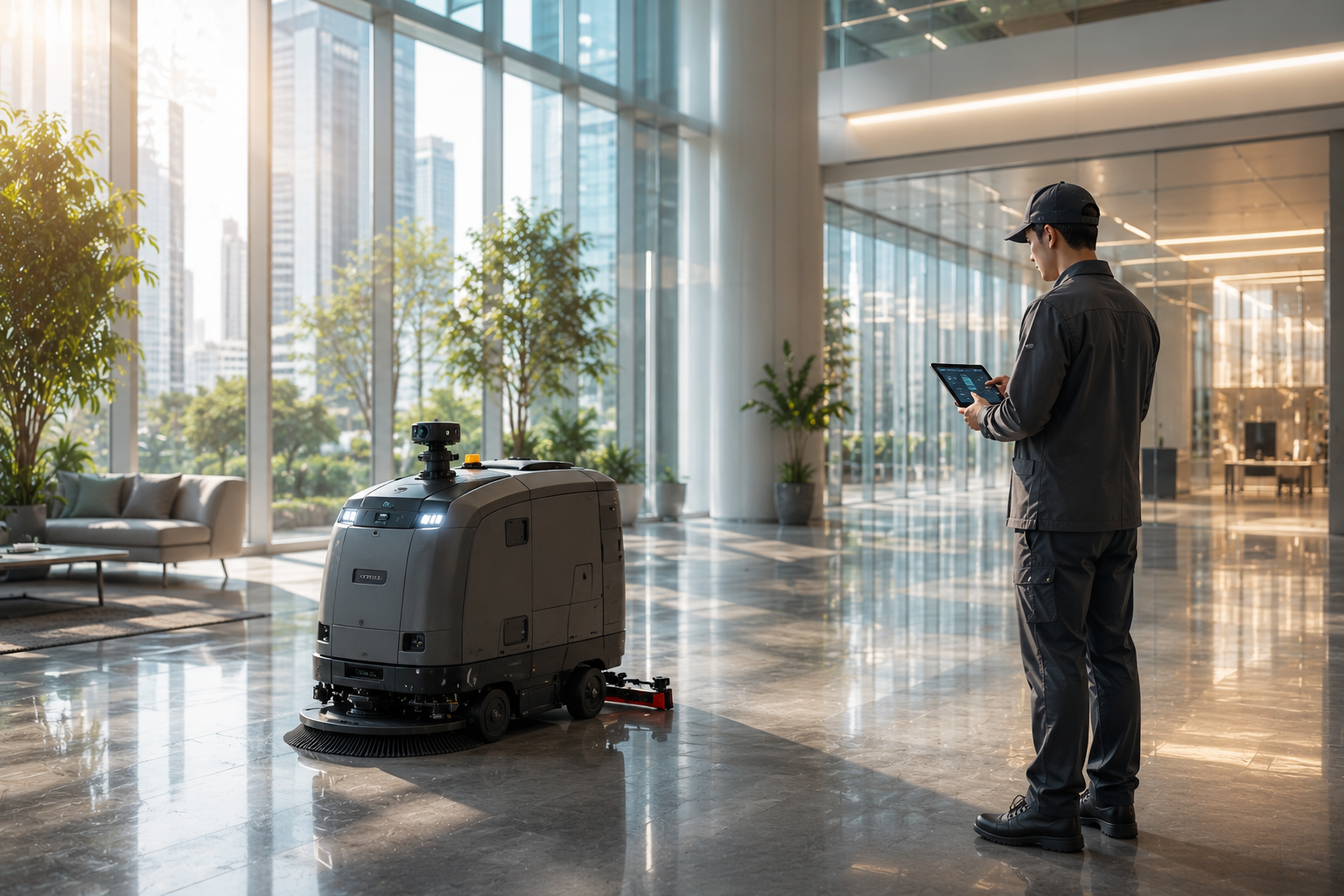
How Robotics, Data, and Human Expertise Are Reshaping the
Delivery and Measurement of Facility Services
Prabhu Soundarrajan, Head of Corporate Development & Strategy
Originally published in the Fall 2026 issue of CoreNews
Today’s workplaces require more than visibly clean spaces. Facility leaders are increasingly expected
to deliver consistent service, respond to changing conditions, and demonstrate performance across complex
environments.
Traditional operating models, largely organized around scheduled tasks and labor deployment, can struggle
to meet these expectations. Robotics, artificial intelligence, and operational data offer new capabilities,
but technology alone is not the answer. The more consequential change is the emergence of an operating
model that coordinates people, machines, and information more effectively.
The future of the industry will not be determined by the number of people or robots deployed. It will be shaped by how effectively their respective strengths are combined.
From Task Execution to Coordinated Outcomes
For decades, facility services followed a relatively straightforward model: assign labor, complete scheduled
tasks, and inspect the results. That model is evolving as routine, repeatable work becomes increasingly suitable for automation.
Robotics does not simply change who or what performs a task. It can change how work is planned, monitored,
and improved. When repetitive activities are automated, employees can spend more time on detail work, exception handling, occupant needs, and situations that require judgment or adaptability.
This is the central principle of human-centered automation: technology should support the workforce
while preserving human oversight and accountability. Successful implementation requires thoughtful job design, appropriate training, and clear processes for deciding when people should intervene.
Robotics in Practice
Robotic floor-cleaning systems are particularly well suited to large, open, high-frequency environments such as office campuses, commercial buildings, transportation facilities, and public spaces.
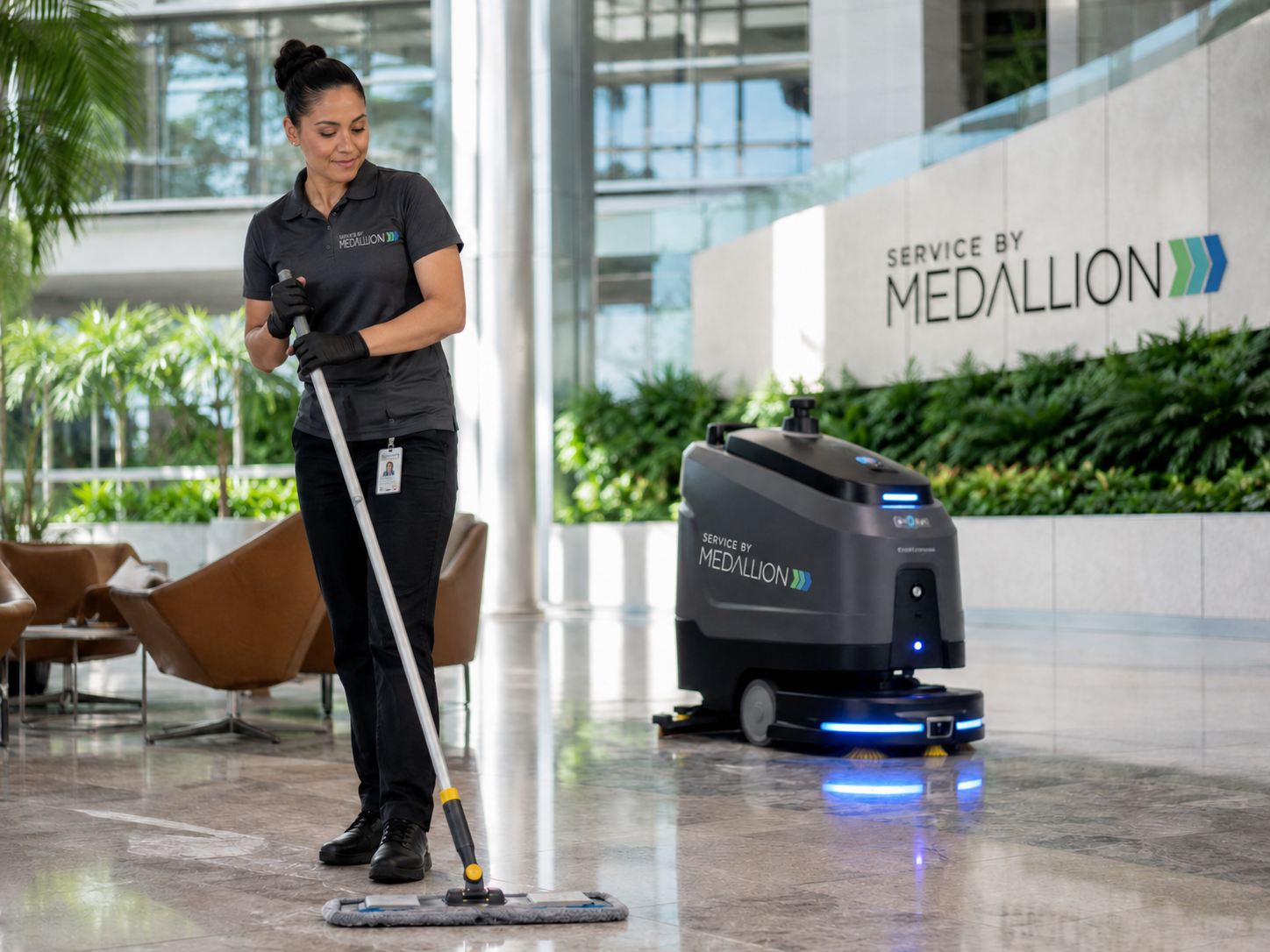
When routes and operating conditions are properly configured, these systems can provide repeatable coverage and reduce variation between shifts. They can establish a reliable baseline for routine floor care while allowing employees to focus on edges, obstacles, high-touch areas, and other work requiring greater precision.
The results, however, depend on the environment. Building layout, traffic patterns, maintenance practices, equipment reliability, and staff adoption all influence performance. Robotics should therefore be evaluated as part of the wider service operation rather than as a standalone replacement for existing labor.
In many deployments, the immediate benefit is not a reduction in headcount. It is a redistribution of effort. Time previously spent on repetitive floor care can be directed toward higher-value responsibilities, including quality assurance, customer service, and response to changing facility conditions.
From Cleaning Activity to Measurable Performance
One of the most significant advantages of connected cleaning systems is the operational data they can produce. Depending on the technology, this may include coverage maps, routes completed, cleaning frequency, operating time, and activity within designated zones.
This information can give facility teams greater visibility into how work is being performed. Rather than relying solely on schedules or visual inspections, managers can examine whether targeted areas were covered, how frequently high-traffic spaces were serviced, and where operating plans may need adjustment.
Data does not prove cleanliness on its own, and it should not replace direct inspection or occupant feedback. It can, however, provide evidence that planned work occurred and help teams identify patterns that would otherwise be difficult to see.
The result is a shift from measuring activity, such as hours worked or tasks assigned, to evaluating service outcomes. This creates opportunities for more transparent reporting, informed decision-making, and continuous improvement.
Toward an Integrated Facilities Operating System
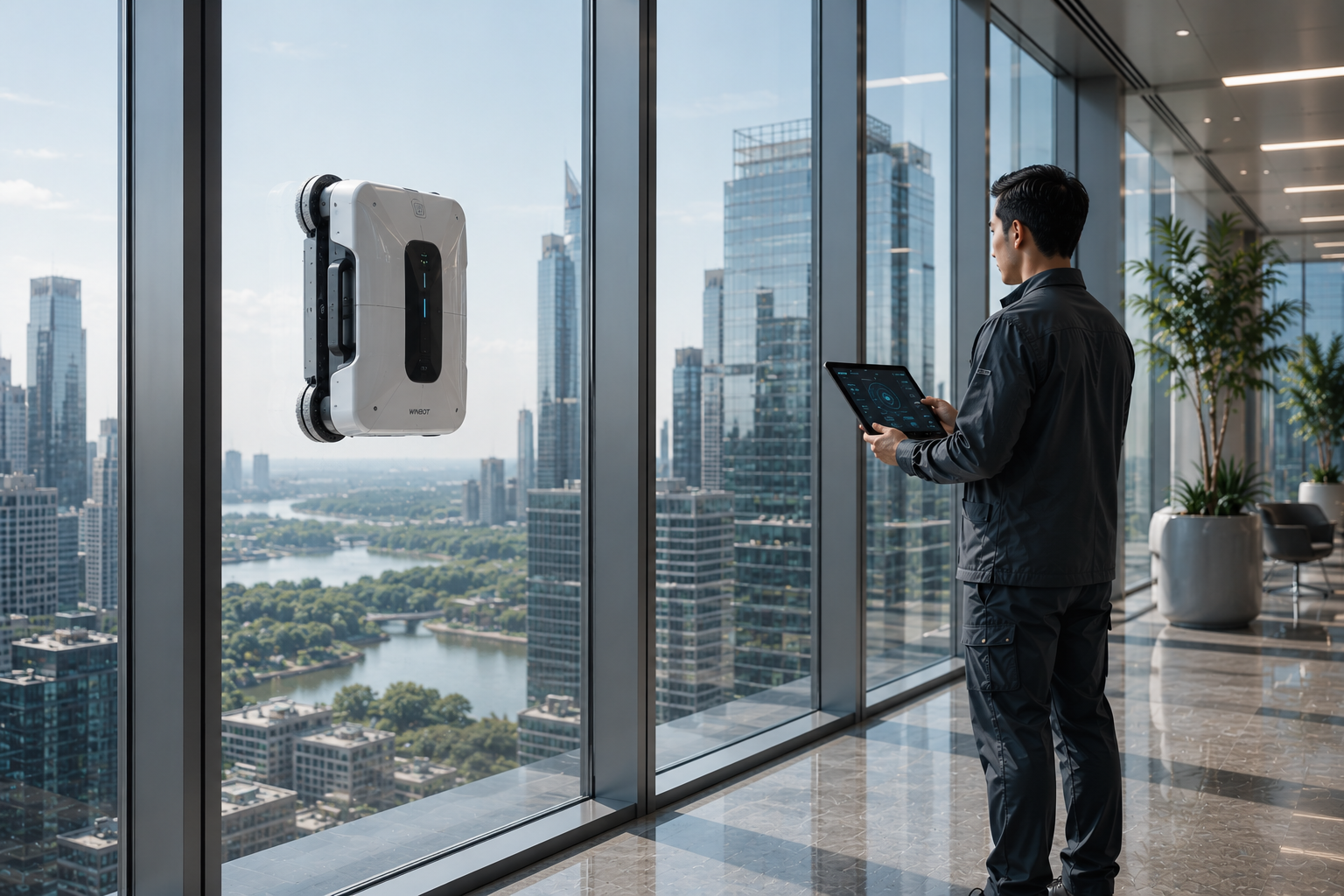
Robotics represents one part of a broader transformation. As autonomous equipment, artificial intelligence, building systems, and operational data become more connected, facility services can be managed as a coordinated system.
In this model, work is not governed only by fixed schedules. Occupancy information, service requests, equipment conditions, and environmental data can help determine where attention is needed. Human teams and automated systems can then be deployed according to actual conditions.
Related applications are already emerging across the built environment, including predictive maintenance, occupancy-informed cleaning, automated work allocation, and real-time environmental monitoring. Together, these capabilities can help organizations move from reactive service delivery toward more responsive operations.
Reaching that point requires integration. New technology must work with existing workflows, reporting systems, security requirements, and service standards. Organizations also need clear governance over how data is collected, interpreted, and used.
Why the Shift Matters
Two forces are accelerating interest in this operating model.
The first is continued pressure on the facility-services workforce. Recruiting and retaining employees for physically demanding and repetitive roles remains difficult in many markets. Automation can help organizations use available labor more effectively, although it does not eliminate the need for experienced employees.
The second is rising demand for transparency and consistency. Clients increasingly want to understand not only what services were scheduled, but what was delivered and how performance varies across buildings or locations.
These pressures make it harder to scale through labor alone. They also increase the value of systems that combine operational capacity with reliable performance information.
Evaluating the Value of Robotics
The business case for robotics should extend beyond a simple calculation of labor savings. Direct cost reductions may be limited or may take time to materialize, particularly during early deployments.
A broader assessment should consider:
- Consistency and coverage
- Quality of service
- Workforce utilization
- Safety and ergonomics
- Operational resilience
- Availability of performance data
- Equipment, integration, and maintenance costs
- Training and change-management requirements
The strongest results are likely to come from deployments built around clearly defined operational needs. Introducing robotics without redesigning workflows may add complexity without producing meaningful improvement.
The Continuing Role of People
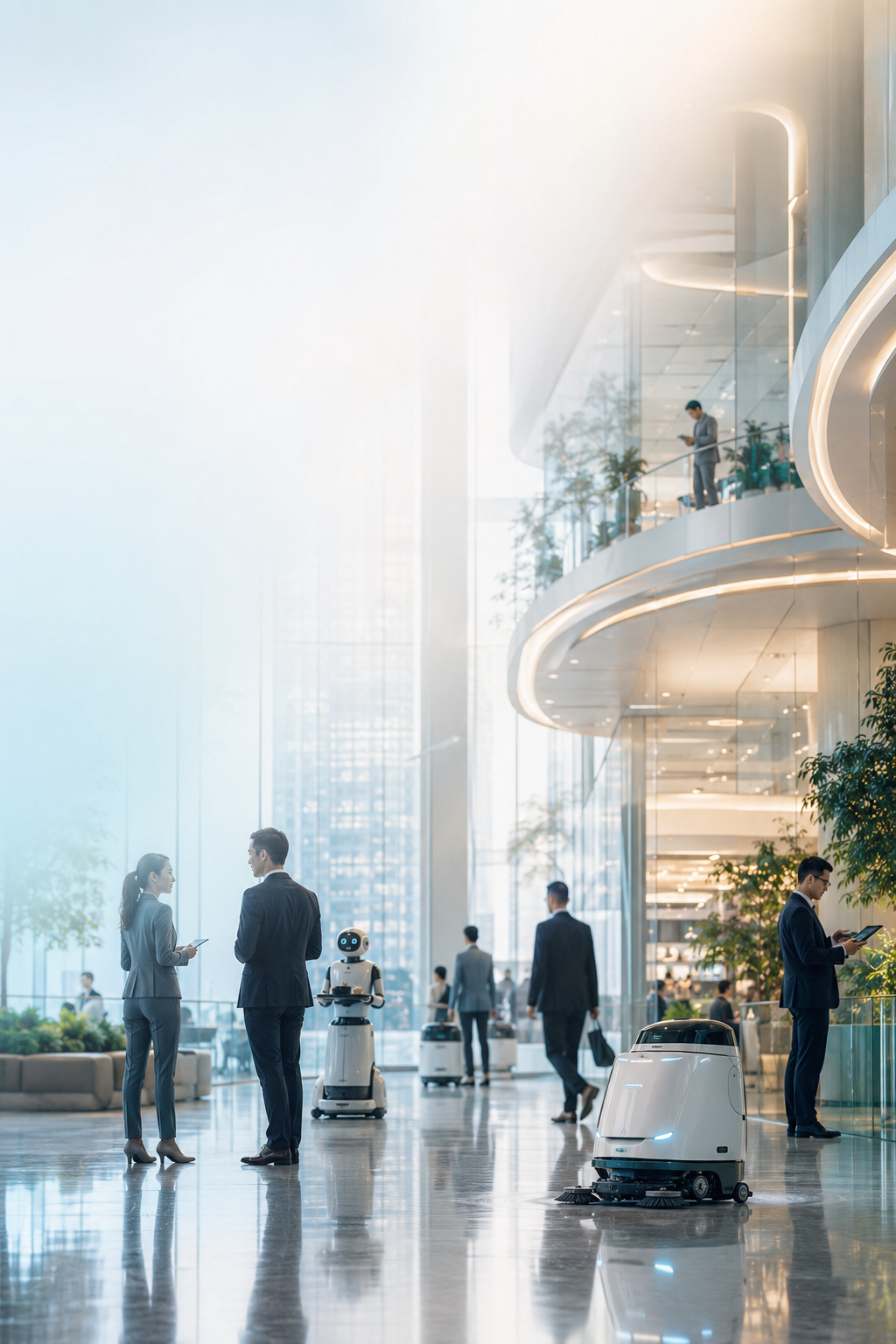
As automation expands, people remain essential to facility operations. Employees understand the nuances of a building, recognize unexpected conditions, respond to occupants, and make decisions that automated systems cannot reliably make on their own.
The role of the workforce may change as routine execution gives way to monitoring, coordination, maintenance, analysis, and specialized service. Organizations should prepare for that transition through training and by involving employees in the design of new workflows.
Human-centered implementation is not only a workforce consideration. It also improves operational outcomes. Employees who understand the purpose and limitations of a system are better positioned to use it effectively, recognize problems, and identify opportunities for improvement.
The Future of Facility Operations
Facility operations will increasingly be defined by how well organizations coordinate people, technology, and information. Robotic cleaning is an important development within that transition, but it is not an operating strategy by itself.
Its value depends on how well it is integrated with human expertise, building requirements, service processes, and meaningful performance measures. Technology provides consistency and information; people provide judgment, adaptability, and accountability.
For service providers such as Service by Medallion, the opportunity is to help bring those elements together responsibly. The objective is not automation for its own sake, but facility operations that are more consistent, transparent, responsive, and measurable.
The future of the industry will not be determined by the number of people or robots deployed. It will be shaped by how effectively their respective strengths are combined.